


In the modern landscape of dating and relationships, clarity can be surprisingly hard to find. We live in an era of “situationships,” “ghosting,” and the paradox of choice, where the next potential partner is just a swipe away. When you are in the thick of a relationship—navigating the messy, beautiful, and sometimes frustrating day-to-day dynamics—it is easy to lose perspective.
This post contains Amazon affiliate links, meaning I may earn a small commission if you purchase through my links, at no extra cost to you. Note: We aim to provide accurate product links, but some may occasionally expire or become unavailable. If this happens, please search directly on Amazon for the product or a suitable alternative.
You might find yourself asking: Is this just a rough patch, or are we fundamentally incompatible? Is relationships supposed to be this much work, or am I forcing something that isn’t meant to be?
In the beginning, chemicals like dopamine and oxytocin flood our brains, creating a “honeymoon phase” where red flags look like mere quirks. But as that chemical fog lifts, reality sets in. A relationship worth keeping isn’t defined by the absence of conflict or the perpetual presence of romance. Instead, it is defined by a specific set of foundational elements that signal safety, respect, and mutual evolution.
If you are standing at a crossroads, unsure if you should hold on or let go, look for these five profound signs. They are the indicators of a partnership that is not just surviving, but thriving.
1. You Are Unapologetically Yourself (The “Exhale” Factor)
We have all been there: the early stages of dating where you curate your personality. You might pretend to love indie rock, hide your bizarre morning routine, or suppress your anxiety to appear “chill.” While a certain degree of politeness is normal early on, a relationship worth keeping allows you to drop the act completely.

In psychology, this is known as psychological safety. It is the belief that you will not be punished or humiliated for speaking your mind, sharing your ideas, or revealing your flaws.
In a toxic or incompatible relationship, you often feel like you are walking on eggshells. You constantly monitor your tone, edit your texts three times before sending, and hide parts of your history because you fear judgment or conflict. You shrink yourself to fit into the small space your partner has allowed for you. This often leads to a cycle of pleasing others at your own expense. If you struggle with this, learning how to stop people-pleasing and set lasting boundaries is a critical step toward finding a partner who values the real you.
In stark contrast, a healthy partner loves the high-definition version of you, not the edited trailer. You know you are in a relationship worth keeping when you can be messy, silly, emotional, or tired without fear that your partner’s affection will waver. You don’t have to “perform” happiness or perfection to earn their love. When you walk through the door after a long day, you feel a sense of relief—a physical and emotional “exhale.” If being with your partner feels like coming home to yourself, rather than running away from yourself, you have found something rare.
2. You Lift Each Other Higher (The Growth Mindset)
There is a common saying that you become the average of the five people you spend the most time with. In a romantic relationship, this effect is amplified. Your partner is the primary influence on your mental state, your daily habits, and your self-esteem.
Some relationships operate on a dynamic of “misery loves company.” In these pairings, partners bond over shared complaints, bad habits, or cynicism. If one person tries to improve—perhaps by eating healthier, seeking therapy, or chasing a promotion—the other person reacts with jealousy or sabotage, subconsciously fearing that if their partner grows, they will be left behind. This is often a sign you are dealing with people who think they are superior or controlling, which creates a “crabs in a bucket” mentality—a death sentence for long-term happiness.

A relationship worth keeping acts as rocket fuel for your potential. This doesn’t mean your partner is your life coach or your manager; it means they are your witness and your cheerleader. When you are down, they remind you of your capabilities. When you succeed, they celebrate without a hint of envy.
This sign is often subtle. It manifests in the quiet moments: a partner who takes over the chores so you can study for an exam, or someone who listens to you practice a presentation until you get it right. They see the version of you that could be, and they help you bridge the gap between who you are and who you want to become. If you look back at the last year and realize you are a stronger, kinder, or more ambitious person because of their influence, the relationship is a keeper.
3. Differences Are Celebrated, Not Just Tolerated
We are often sold the myth of the “Soulmate” as a person who is our mirror image—someone who likes the same music, shares the same hobbies, and agrees with every opinion. While shared core values (like views on money, family, and ethics) are essential, shared interests are not. In fact, too much similarity can lead to stagnation or competition.
In a relationship worth keeping, differences aren’t deal-breakers; they are the spice that keeps the dynamic interesting.
Consider the “Planner” and the “Risk-Taker.” In an unhealthy relationship, the Planner feels anxious about the Risk-Taker’s impulsivity, and the Risk-Taker feels suffocated by the Planner’s schedules. They resent each other for not being the same. Sometimes, these constant clashes can make us wonder if we have deeper issues, but often it’s just a matter of perspective. However, if trust is eroding because of these differences, it is important to recognize the 5 signs you may have trust issues so you can address them before they damage the bond.
In a healthy relationship, however, they recognize that they make a complete team. The Planner ensures they have a roof over their heads, and the Risk-Taker ensures they actually leave the house to have an adventure. They value what the other brings to the table.
If you enjoy painting and silence, and your partner loves football and loud social gatherings, that is not a sign of incompatibility. It is an opportunity. It gives you both the space to maintain your own identities. You have new things to teach one another and fresh stories to share when you reconnect at the end of the day. If you can look at your partner’s differences with curiosity rather than annoyance, your foundation is solid.
Ready to take your relationship from “good” to “thriving”?
We’ve saved the best practical advice for our subscribers. Unlock the full experience by downloading the Enhanced PDF Version of this article.
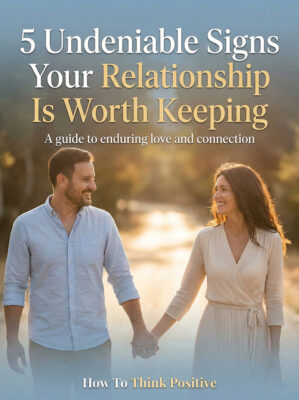
It contains a bonus relationship audit worksheet and exclusive takeaways that aren’t published on the website.
✅ Key Takeaways for quick clarity
✅ A “Truth” Exercise to test your relationship
✅ Bonus Tips you won’t find on the blog
Sign up for the How To Think Positive newsletter below to download your free copy, share it with loved ones, and start building a foundation that lasts.
4. Zero Tolerance for Mind Games
Pop culture often romanticizes the “chase.” We are taught that uncertainty equals passion. We confuse anxiety—the butterflies in the stomach, the obsession over a text response—with love. But let’s be clear: confusion is not passion. Confusion is just confusion.
One of the strongest indicators of a relationship worth keeping is the absence of mind games. There is no “hot and cold” behavior. There is no unspoken punishment where one partner gives the silent treatment until the other guesses what they did wrong. There is no manipulation designed to make you jealous.
Instead, there is clarity. This is the hallmark of a secure attachment style. In these relationships, “I love you” is a statement of fact, not a bargaining chip. When conflict arises—and it will—it is handled with a “us vs. the problem” mentality, rather than “me vs. you.” If you find yourself constantly struggling with conflict, it might be helpful to learn 6 basic steps towards overcoming anger to ensure fights remain productive rather than destructive.
If you find yourself constantly playing detective, analyzing their social media activity, or decoding cryptic comments to figure out where you stand, you are expending energy that should be used for living your life. A keeper provides a sense of emotional stability. You know they are on your team. You know that even when you are arguing, they still care about you. This security is the bedrock upon which a future can be built.
5. Knowing That It Can End At Any Time (The Choice Paradigm)
This final sign may sound morbid or counterintuitive, but it is perhaps the most enlightened aspect of a mature relationship.
Many unhealthy relationships are fueled by codependency—the feeling that you cannot survive without the other person. This neediness leads to controlling behavior, jealousy, and a fear-based connection. You stay because you are afraid of being alone, not because the relationship is good. Sometimes, recognizing this dynamic is the first step in escaping toxic people for good, even if that person is a romantic partner.
A relationship worth keeping is grounded in the reality of choice. It is the recognition that both of you are autonomous individuals who could, in theory, walk away. You are not bound by inability; you are bound by desire.
When you accept that relationships are impermanent—that people change and life is unpredictable—you stop taking your partner for granted. You realize that you have to “win” them over again every single day. You wake up in the morning and actively choose them.
There is a profound freedom in this. It means you aren’t staying out of obligation, financial dependence, or fear. You are staying because their presence adds value to your life that solitude cannot. When two people acknowledge they are free to leave but consistently choose to stay, the bond becomes incredibly powerful. It shifts the dynamic from a cage to a nest—a place you return to because it is where you want to be.
Conclusion
Evaluating a relationship is rarely black and white. Every couple has bad days. However, these five signs serve as a compass. If you can be your true self, if you are growing together, if you respect your differences, if you communicate without games, and if you choose each other freely, you have something incredibly special.
Do not throw away a relationship that possesses these core traits just because the spark has dimmed momentarily or life has gotten stressful. These foundations are rare. If you have them, the relationship is not just worth keeping—it’s worth fighting for. And if you do find yourself at the end of a chapter, remember there are ways to handle dealing with a broken relationship quickly so you can heal and move forward.
5 Frequently Asked Questions (FAQs)
- Can a relationship be “worth keeping” if the passion is gone?
Yes. Passion fluctuates in all long-term relationships. If the foundational respect, trust, and friendship (the signs listed above) are still there, passion can often be reignited through effort and novelty. - What if we have these signs, but we argue a lot?
Frequency of conflict matters less than how you argue. If you have these 5 signs but still argue, look at your conflict resolution style. Are you fighting to win, or to understand? If there is no contempt or abuse, frequent bickering can often be fixed with better communication tools. - Is it okay to miss the “chase” of early dating?
It is normal to miss the dopamine rush of early romance, but it’s dangerous to confuse that anxiety with love. If you feel bored because there is no drama, it might be a sign you need to work on your own addiction to emotional highs, rather than a flaw in the relationship. - Can a partner learn to “lift you up” if they haven’t before?
Sometimes. People often repeat what they learned in childhood. If you communicate clearly that you need more encouragement and less criticism, a willing partner can change. If they dismiss your needs or mock your growth, they likely won’t change. - How do I know if I’m staying out of love or fear (Sign #5)?
Try the “Magic Button” test. If there was a button you could press to instantly end the relationship without pain, drama, or loneliness, would you press it? If yes, you are likely staying out of fear. If no, you are staying out of love.