


This guide will transform how you navigate relationships by teaching you to prioritize your needs without guilt. You’ve spent years saying yes when you meant no, overextending yourself to keep everyone happy while your own well-being takes a backseat. Breaking free from people-pleasing isn’t selfish—it’s imperative for building authentic connections and preserving your mental health. Through practical strategies and honest reflection, you’ll discover how to establish firm boundaries that protect your energy, communicate your limits confidently, and create relationships based on mutual respect rather than one-sided sacrifice. Your journey toward reclaiming your voice starts here.
This post contains Amazon affiliate links, meaning I may earn a small commission if you purchase through my links, at no extra cost to you. Note: We aim to provide accurate product links, but some may occasionally expire or become unavailable. If this happens, please search directly on Amazon for the product or a suitable alternative.
Understanding People-Pleasing
What is People-Pleasing?
People-pleasing shows up when you say yes to things you desperately want to say no to, when you apologize for things that aren’t your fault, and when you twist yourself into a pretzel trying to make everyone around you comfortable while your own needs collect dust in the corner. You’re the person who volunteers for the extra shift even though you’re exhausted, who laughs at jokes that aren’t funny, and who agrees with opinions you don’t actually hold just to keep the peace. This pattern goes deeper than just being nice or considerate—it’s a compulsive need to gain approval and avoid conflict at any cost, even when that cost is your own well-being.
The difference between genuine kindness and people-pleasing lies in your motivation and the aftermath. When you help someone from a place of authentic generosity, you feel energized and fulfilled. When you people-please, you feel drained, resentful, and often invisible. You might find yourself keeping a mental scorecard of all the things you’ve done for others, silently hoping they’ll notice and reciprocate. Your decisions aren’t really yours—they’re calculated responses designed to manage other people’s emotions and reactions.
The Roots of People-Pleasing
Most people-pleasing patterns were planted in childhood, often in homes where love felt conditional. Maybe you learned that being “good” meant being quiet, compliant, and never causing trouble. Perhaps you had a parent whose mood determined the entire household’s atmosphere, so you became hypervigilant, constantly reading the room and adjusting your behavior to keep things calm. Some of you grew up in environments where your needs were dismissed or minimized, teaching you that what you wanted didn’t matter as much as what others needed from you.
These early experiences wired your brain to equate approval with safety and rejection with danger. You learned to scan faces for signs of disappointment, to anticipate needs before they were spoken, and to suppress your own desires to maintain harmony. For many, people-pleasing became a survival strategy—a way to navigate unpredictable or emotionally volatile environments. What worked to keep you safe as a child, though, now keeps you trapped in patterns that no longer serve you.
Ready to turn these tips into lasting change?
Take your boundary-setting journey to the next level with our FREE enhanced PDF guide – perfect for keeping these strategies handy and sharing with friends who need them too!

Download your “How to Stop Being a People-Pleaser and Finally Set Boundaries That Stick” PDF and get:
✅ All key takeaways summarized for quick reference
✅ Exclusive “Boundary Audit” exercise not in the article
✅ 5 bonus boundary scripts for tricky situations
✅ Beautiful, mobile-friendly format to read anywhere
Get instant access when you join the How To Think Positive newsletter. You’ll also receive weekly mindset tools and uplifting insights delivered gently to your inbox.
👉 Click Here to Download Your Free Enhanced Guide
Your journey to becoming confidently, unapologetically YOU starts here – no people-pleasing required! 💪

Your people-pleasing might also stem from experiences of rejection, bullying, or being excluded. If you were left out, criticized, or made to feel “too much” or “not enough,” you may have concluded that the problem was you—that if you could just be more agreeable, more helpful, more accommodating, you’d finally belong. This belief system becomes a lens through which you view all relationships, always working harder to earn a place at the table rather than believing you deserve a seat simply by existing.
The Consequences of People-Pleasing
Living as a chronic people-pleaser erodes your sense of self until you barely recognize who you are beneath all the accommodating. You lose touch with your own preferences, opinions, and desires because you’ve spent so long prioritizing everyone else’s. When someone asks what you want for dinner or how you’d like to spend your weekend, you draw a blank—not because you don’t have preferences, but because you’ve trained yourself not to access them. Your identity becomes a collage of other people’s expectations rather than an authentic expression of who you actually are.
The relationships you build through people-pleasing are fundamentally unbalanced and ultimately unfulfilling. People relate to the agreeable version of you that you present, not the real you with boundaries, needs, and occasionally inconvenient feelings. You attract people who are happy to take what you offer without reciprocating, creating a dynamic where you give and give while feeling increasingly depleted and resentful. Your friendships lack depth because you never risk being truly seen, and your romantic relationships suffer because your partner falls in love with a persona, not a person—leaving you feeling lonely even when you’re not alone.

Recognizing the Signs
Are You a People-Pleaser?
You know that sinking feeling when someone asks you for a favor and your mouth says “yes” before your brain even has a chance to weigh in? That’s your first clue. People-pleasers operate on autopilot, their default setting stuck permanently on “whatever you need.” You might find yourself lying awake at 2 AM, mentally replaying conversations and obsessing over whether you said the right thing or if someone seemed slightly disappointed with you. The exhaustion isn’t just physical—it’s the constant mental gymnastics of trying to be everything to everyone while your own needs gather dust in the corner.

Your calendar tells another story entirely. Every slot is filled with commitments you didn’t really want to make, coffee dates with people who drain you, and volunteer positions you accepted out of guilt rather than genuine interest. Meanwhile, that self-care routine you promised yourself keeps getting pushed to “next week.” You’ve become a master at reading the room, adjusting your opinions and personality to match whoever you’re with, shape-shifting so often that you’ve forgotten what your authentic self even looks like.
Common Behaviors and Traits
The word “no” has necessarily vanished from your vocabulary, replaced by elaborate explanations and apologies whenever you even consider declining a request. You over-apologize for things that don’t warrant an apology—sorry for having an opinion, sorry for taking up space, sorry for existing in a way that might inconvenience someone for half a second. Your conversations are peppered with qualifiers like “I might be wrong, but…” or “This is probably stupid, but…” because you’re already minimizing yourself before anyone else gets the chance to.
You’ve developed an uncanny ability to sense tension and immediately assume you’re the cause of it. Someone’s in a bad mood? Must be something you did. A friend hasn’t texted back in three hours? Clearly, they hate you now. You constantly seek validation and reassurance, fishing for compliments not out of vanity but from a desperate need to confirm that you’re still acceptable, still worthy of love and belonging. Your own boundaries are so porous that people regularly walk all over them without even realizing they’re doing it—because you’ve never actually established where those lines are drawn.
Decision-making becomes a group project even when it shouldn’t be. Choosing a restaurant for dinner turns into an exhausting round of “I don’t care, what do you want?” because you’re terrified of picking wrong and disappointing someone. You regularly sacrifice your own preferences, time, and resources to accommodate others, then feel resentful afterward but never actually say anything about it. That resentment builds like plaque in an artery, slowly hardening into bitterness while you maintain your sunny exterior and continue saying yes to things that make you miserable.
Emotional and Mental Indicators
Anxiety has become your constant companion, that low-grade buzz of worry that something’s about to go wrong or someone’s about to be upset with you. You experience physical symptoms—tension headaches, stomach issues, fatigue—that doctors can’t quite explain because they’re rooted in the stress of constantly performing for others. Your self-worth is entirely external, rising and falling based on other people’s reactions to you like a stock price tied to market whims. One criticism can send you spiraling for days, while compliments barely register because you’ve already dismissed them as insincere or undeserved.
You feel invisible in your own life, like you’re watching yourself go through the motions rather than actually living. There’s a persistent emptiness, a sense that something’s missing, but you can’t quite put your finger on what it is because you’ve been so busy being who everyone else needs you to be. Your emotional tank runs on fumes constantly, and you might find yourself snapping at loved ones over small things because you’ve given everything to everyone else and have nothing left. You fantasize about disappearing—not in a dark way, but just imagining what it would be like to have a day, a week, or a life where your only responsibility was to simply be yourself.
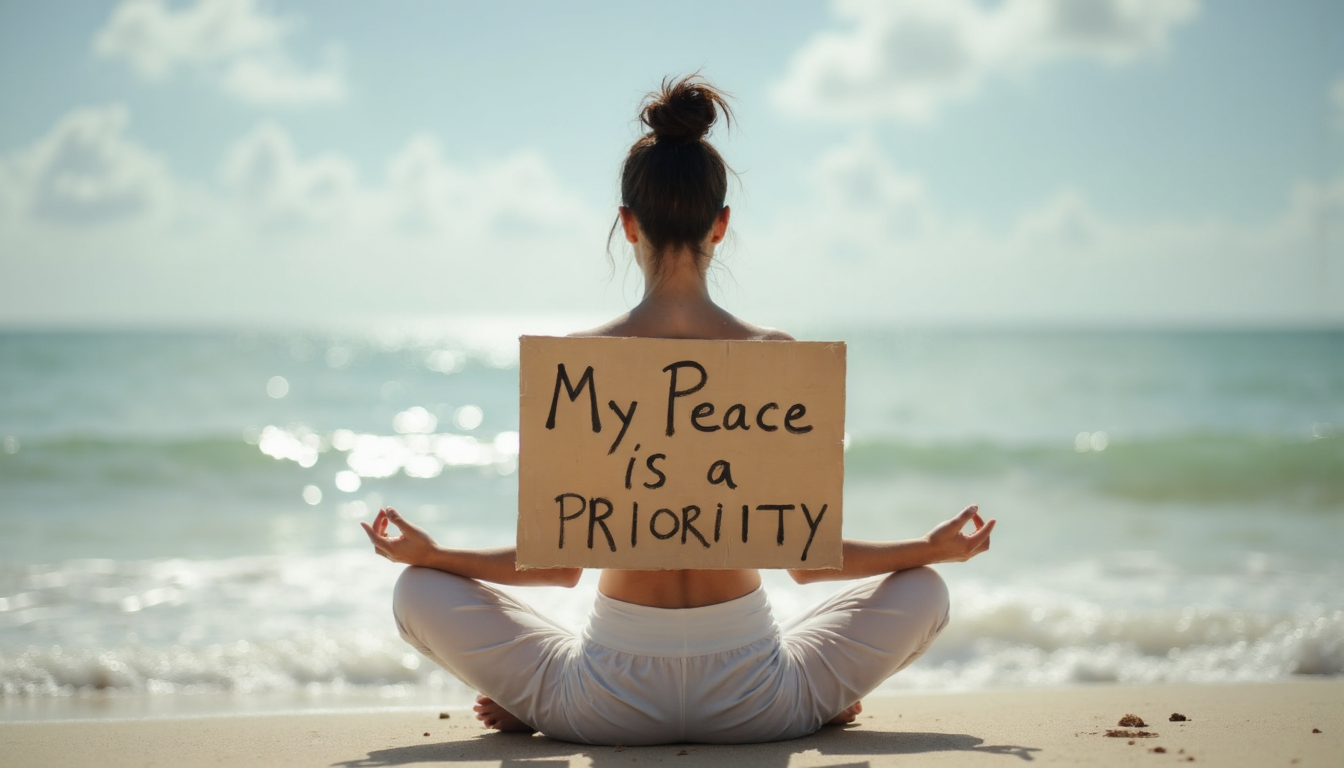
The Importance of Boundaries
What Are Boundaries?
Boundaries are the invisible lines you draw around your time, energy, emotions, and personal space that tell others what you will and won’t accept. Think of them as your personal property lines—they define where you end and someone else begins. When you say “I can’t take on extra work this week” or “I need some alone time to recharge,” you’re establishing a boundary that protects your wellbeing.
Most people-pleasers struggle with boundaries because they’ve been taught that saying no makes them selfish or unkind. You might have grown up believing that your needs should always come second, or that disappointing others is the worst thing you could do. But boundaries aren’t walls meant to keep people out—they’re guidelines that help you maintain healthy relationships while honoring your own limits. Without them, you’re imperatively living in a house with no doors, where anyone can walk in and take whatever they want from you.
Why Boundaries Matter
Your mental and emotional health depends on having clear boundaries in place. When you constantly say yes to everyone else’s demands, you drain your own reserves until there’s nothing left for yourself. You end up feeling resentful, exhausted, and taken advantage of—not because people are intentionally using you, but because you’ve never shown them where your limits are. Boundaries give you the freedom to choose how you spend your time and energy rather than letting others decide for you.
Healthy boundaries actually improve your relationships rather than damage them. When you’re honest about what you can and cannot do, people know where they stand with you. There’s no guessing, no passive-aggressive behavior, and no built-up resentment that explodes later. You become more reliable because you only commit to what you can genuinely handle, and others learn to respect your needs because you’ve demonstrated that those needs are non-negotiable.
Setting boundaries also teaches people how to treat you. Every time you accept behavior that makes you uncomfortable or say yes when you want to say no, you’re training others that your limits don’t matter. On the flip side, when you consistently enforce your boundaries—even when it feels uncomfortable—you show the world that you value yourself. This doesn’t make you difficult or demanding; it makes you someone who knows their worth and isn’t afraid to protect it.
Types of Boundaries
Boundaries show up in every area of your life, and understanding the different types helps you identify where you might be letting others cross the line. Each category requires its own set of limits based on your personal needs, values, and comfort levels. You might have strong boundaries in one area while struggling in another—that’s completely normal and gives you a starting point for where to focus your energy.
| Boundary Type | What It Protects |
| Physical | Your personal space, body, privacy, and physical needs like sleep and health |
| Emotional | Your feelings, self-esteem, and the right to have your emotions respected |
| Time | How you spend your hours, your schedule, and your availability to others |
| Mental | Your thoughts, values, opinions, and the right to disagree |
| Material | Your possessions, money, and how you share your resources |
Recognizing which boundaries you need to strengthen starts with paying attention to situations that leave you feeling drained, resentful, or violated. Here’s what might signal weak boundaries in each area:
- You let people hug you even when you’re not comfortable with physical touch.
- You take on other people’s emotions as if they’re your own problems to solve.
- You cancel your own plans or sacrifice your needs to accommodate someone else’s last-minute request.
- You feel guilty for saying “no” or for taking time for yourself.
- You over-explain and justify your decisions, feeling responsible for other people’s reactions.

Step-by-Step Guide to Break the Cycle
| Phase | Key Actions |
|---|---|
| Self-Reflection | Track your “yes” responses for one week and identify patterns in your people-pleasing behavior |
| Identify Desires | List 5-10 things you genuinely want but have been sacrificing for others |
| Action Planning | Choose one small boundary to implement within the next 48 hours |
| Practice Responses | Write down three polite ways to say “no” and rehearse them out loud |
| Build Support | Share your boundary goals with one trusted friend who will hold you accountable |
Self-Reflection and Awareness
Your people-pleasing habits didn’t develop overnight, and understanding where they come from gives you the power to dismantle them. Grab a journal and start documenting every time you say “yes” when you really mean “no.” Write down who asked, what they wanted, how you felt in the moment, and what you sacrificed to accommodate them. After just three days, you’ll start seeing patterns emerge—maybe you cave most easily to your mother’s requests, or perhaps you overextend yourself at work but hold firm with friends.
The physical sensations in your body tell you everything you need to know about crossing your own boundaries. That knot in your stomach when your phone rings with a certain person’s name? That’s your internal alarm system screaming for attention. The exhaustion that settles over you after agreeing to host yet another event? That’s your body keeping score. Pay attention to these signals instead of pushing them down with rationalizations about being “nice” or “helpful.” Your body knows the truth before your mind catches up.
Identify What You Want
Most people-pleasers have spent so long prioritizing everyone else’s needs that they’ve completely lost touch with their own desires. You might find yourself staring blankly when someone asks what you actually want because that muscle has atrophied from lack of use. Start small by noticing your preferences throughout the day—do you want coffee or tea? Would you rather take a walk or read a book? These tiny choices rebuild your ability to recognize and honor your own wants.
Make a list of everything you’ve been putting off because you’re too busy doing things for other people. Maybe you’ve wanted to take a painting class, start training for a 5K, or simply have one evening per week completely to yourself. Write down both the big dreams and the small comforts you’ve been denying yourself. This list becomes your roadmap for reclaiming your life, one boundary at a time.
The difference between what you’re doing now and what you actually want to be doing reveals exactly where you need to set boundaries. If you’re spending every weekend helping your sister move, babysitting for neighbors, or attending events you dread, while your own hobby supplies collect dust in the closet, you’ve found your answer. This gap between your current reality and your desired life shows you precisely where to focus your boundary-setting energy.
Create an Action Plan
Breaking the people-pleasing cycle requires concrete steps, not just good intentions. Choose one specific boundary to implement this week—something manageable but meaningful. Maybe you’ll stop responding to work emails after 7 PM, or you’ll say “no” to that extra project you don’t have capacity for.

Overcoming Obstacles
Dealing with Guilt
That gnawing feeling in your stomach when you say no? That’s guilt trying to convince you that protecting your own needs makes you selfish. Here’s the truth: guilt is often just your old people-pleasing patterns throwing a tantrum because you’re changing the rules. You’ve spent years conditioning yourself to believe that your worth depends on making everyone else happy, so naturally your brain freaks out when you start prioritizing yourself. The guilt isn’t a sign that you’re doing something wrong—it’s actually proof that you’re doing something different, something necessary.
Instead of trying to eliminate guilt entirely, learn to sit with it like an uncomfortable houseguest who will eventually leave. Acknowledge it without letting it control your decisions. You might say to yourself, “I feel guilty right now, and that’s okay. I can feel guilty and still maintain this boundary.” Over time, as you consistently honor your limits and watch the world keep spinning, that guilt will lose its grip. You’ll start to see that the people who truly care about you adjust and respect your boundaries, while the relationships built solely on your compliance weren’t serving you anyway. Give yourself permission to feel uncomfortable while you’re growing into this new version of yourself.
Handling Reactions from Others
Brace yourself: some people are going to lose their minds when you start setting boundaries. The friend who always calls at midnight will act shocked. Your family member who treats you like their personal assistant will suddenly have a lot to say about how you’ve “changed.” These reactions aren’t about you—they’re about them losing access to the unlimited well of your time and energy they’ve grown accustomed to. People who benefited from your lack of boundaries will often be the loudest protesters when you finally install them.
The pushback might come disguised as concern (“Are you okay? You’re acting so different lately”) or as manipulation (“I guess I’m just not important to you anymore”). Some people will test your boundaries repeatedly, hoping you’ll cave like you always have before. They might guilt-trip you, give you the silent treatment, or recruit others to convince you to go back to your old ways. This is the moment where your resolve gets tested—and where you discover who’s actually in your corner.
Your job isn’t to manage their feelings about your boundaries or to convince them that your limits are valid. You don’t need to write a dissertation defending why you can’t drop everything to help them move for the third time this year. A simple, calm restatement of your boundary works: “I understand you’re disappointed, but this is what works for me.” Then hold steady. The people worth keeping in your life will adjust once they realize you’re serious. The ones who can’t respect your boundaries? They’re showing you exactly who they are—believe them.
Staying Committed to Your Boundaries
The first few weeks of boundary-setting feel like walking through wet cement—every step requires enormous effort. You’ll be tempted to backslide a hundred times, especially when someone makes you feel bad or when maintaining your boundary feels harder than just giving in. This is where most people-pleasers abandon ship and return to their old patterns, convinced that boundaries just “don’t work for them.” But consistency is everything. Each time you honor your boundary, even when it’s uncomfortable, you’re rewiring years of conditioning and teaching people how to treat you.
Think of your boundaries like a fence around your property. If you keep moving the fence every time someone complains about where you put it, nobody will take it seriously—including you. Your boundaries need to be firm enough that people can count on them. That doesn’t mean they’re rigid forever; you can always adjust boundaries as your circumstances change. But the adjustments should come from your own assessment of what you need, not from pressure or guilt from others. Keep a journal to track your boundary-setting wins.
Pros and Cons of Setting Boundaries
Setting boundaries isn’t all sunshine and rainbows, but it’s not the relationship apocalypse either. You need to know what you’re getting into before you start drawing lines in the sand with the people in your life. Let’s break down the real advantages and challenges you’ll face.
| Pros | Cons |
| More energy for yourself and things you actually care about | Some people will push back or get upset initially |
| Less resentment building up inside you | You might feel guilty at first (even when you shouldn’t) |
| Healthier, more honest relationships overall | Certain relationships may end or change dramatically |
| Better mental and emotional well-being | You’ll need to stay consistent, which takes effort |
| Increased self-respect and confidence | Others may label you as “selfish” or “difficult” |
| More time for your own goals and priorities | You’ll have to deal with uncomfortable conversations |
| People learn to respect your limits | Your support system might temporarily shrink |
| You become a better role model for others | You’ll need to learn to sit with discomfort |
| Reduced stress and anxiety in daily life | Old habits will try to creep back in |
| Authentic connections replace superficial ones | You might discover who your real friends are (and aren’t) |
Benefits of Healthy Boundaries
Your life transforms when you start protecting your time and energy like they’re precious resources—because they are. You’ll notice your stress levels dropping as you stop overcommitting to every single request that comes your way. That constant knot in your stomach? It starts loosening when you’re no longer juggling everyone else’s expectations while your own needs sit on the back burner. People who set firm boundaries report feeling more in control of their lives, and that sense of agency ripples out into every area—from work performance to personal relationships.
The relationships that survive your boundary-setting actually become stronger and more genuine. You’re no longer pretending to be available 24/7 or agreeing to things that make you miserable. Your friends and family get the real you, not the exhausted, resentful version who says yes but means no. Plus, you’ll find yourself attracting different types of people—ones who respect your limits rather than constantly testing them. Your self-esteem climbs because you’re finally honoring your own worth instead of measuring it by how much you can do for others.
Potential Drawbacks
Let’s be honest: not everyone will throw you a party when you start saying no. Some people have gotten comfortable with your people-pleasing ways, and they won’t appreciate the new arrangement. You might lose friends who were only around because you were convenient or always available. That coworker who constantly dumped their work on you? They’ll probably get annoyed. Your family member who expects you to drop everything at a moment’s notice? Prepare for some drama. These reactions can sting, especially when you’re already feeling vulnerable about making changes.
The guilt hits differently when you’re breaking lifelong patterns.
Conclusion
Taking this into account, breaking free from people-pleasing isn’t about becoming selfish or cold—it’s about honoring yourself enough to show up authentically in your relationships. You’ve spent so much time reading everyone else’s needs that you’ve probably forgotten your own handwriting. But here’s the beautiful truth: when you start setting boundaries that actually stick, you’re not losing connections; you’re making room for the real ones to flourish. The people who truly value you will respect your limits, and honestly? Those who don’t were probably enjoying the unlimited access a little too much anyway. Your journey to reclaiming your time, energy, and peace starts with one simple “no”—and each one after that gets a little easier. Consider investing in a boundary setting journal or a self-care planner to track your progress and celebrate your wins.
You deserve relationships where your voice matters just as much as everyone else’s. You deserve to feel comfortable saying “that doesn’t work for me” without drafting a 500-word apology essay afterward. The path forward isn’t about perfection—it’s about progress, and every boundary you set is a love letter to your future self. So take a deep breath, stand firm in your worth, and watch how your life transforms when you finally put yourself back on your own priority list. Maybe grab yourself some motivational books or even a set of affirmation cards to keep you inspired along the way. You’ve got this, and you’re already doing better than you think.
Frequently Asked Questions (FAQs)
1. What’s the difference between being a genuinely kind person and being a people-pleaser?
The core difference lies in your motivation and how you feel afterward. Genuine kindness comes from a place of authentic generosity and leaves you feeling energized and fulfilled. People-pleasing, however, is a compulsive need to gain approval and avoid conflict. It leaves you feeling drained, resentful, and invisible because your actions are calculated to manage others’ emotions, not from a true desire to give.
2. I feel guilty every time I try to say “no.” Does this mean I’m doing something wrong?
No, feeling guilty is actually a normal sign that you’re breaking an old pattern. Guilt is your conditioned people-pleasing response throwing a tantrum because you’re changing the rules. It’s proof you’re doing something necessary, not something wrong. Instead of trying to eliminate it, acknowledge it without letting it control you: “I feel guilty right now, and that’s okay. I can feel guilty and still maintain this boundary.” The guilt will lose its power over time.
3. How do I handle it when people get upset or push back against my new boundaries?
Expect some pushback, as people who benefited from your lack of boundaries will protest the change. Their reactions are about them losing access to your time and energy, not a reflection on you. You don’t need to manage their feelings or justify your limits extensively. Stay calm and consistently restate your boundary: “I understand you’re disappointed, but this is what works for me.” The people who truly care about you will adjust, while those who can’t respect your boundaries show you they weren’t in the relationship for the right reasons.
4. What are the main types of boundaries I should be setting?
Boundaries protect every area of your life. The main types include:
- Physical: Protecting your personal space, body, and privacy.
- Emotional: Protecting your feelings and self-esteem.
- Time: Protecting how you spend your hours and your availability.
- Mental: Protecting your thoughts, values, and opinions.
- Material: Protecting your possessions, money, and resources.
5. What are the real benefits of setting boundaries, and are there any drawbacks?
The benefits are significant and include having more energy, less resentment, healthier relationships, better mental well-being, and increased self-respect. However, there are potential drawbacks to be prepared for. Some people will push back or get upset, you might feel initial guilt, and some relationships may end or change dramatically. The key is that the pros—like authentic connections and reduced stress—far outweigh the cons, which are often temporary.