


Free yourself from the loop—it’s not your fault you’re stuck overthinking or doubting your next move. The real culprit? Your brain clinging to familiar patterns. But here’s the fix: pause, label the thought (“Ah, there’s my old fear again”), swap it with a quick affirmation, and anchor it with a snap or stretch. Small shifts crack big cycles. Ready to break free? Try this self-empowerment guide—your mind (and future self) will thank you.
This post contains Amazon affiliate links, meaning I may earn a small commission if you purchase through my links, at no extra cost to you. Note: We aim to provide accurate product links, but some may occasionally expire or become unavailable. If this happens, please search directly on Amazon for the product or a suitable alternative.
The Secret Loop: Why You’re Feeling Stuck
Your brain defaults to familiar patterns—like a song stuck on repeat—because neural pathways strengthen with repetition. Studies show the average person has 6,200 thoughts daily, and 80% tend to be negative. When stress hits, your amygdala hijacks logic, trapping you in analysis paralysis. Breaking free starts with recognizing the loop, not fighting it. Try The Power of Now to train your mind in real-time awareness.
The Neuroscience of Overthinking: How Your Brain Gets Caught
Overthinking activates the prefrontal cortex, flooding your system with cortisol. MRI scans reveal that rumination shrinks gray matter in areas linked to decision-making. Every “what if” triggers a stress response, keeping you stuck. Interrupt the cycle by snapping your fingers—a physical cue that disrupts the neural feedback loop. For deeper insights, Unwinding Anxiety offers science-backed tools.
The Role of Self-Doubt: Identifying Limiting Beliefs
Self-doubt often stems from childhood messages like “You’re not good enough” or past failures. These beliefs become mental shortcuts—your brain’s way of avoiding discomfort. A 2021 study found that 72% of people self-sabotage due to unconscious narratives. Spot them by journaling reactions to challenges: “I can’t” usually masks deeper fears. Swap them with evidence-based affirmations like, “I’ve handled hard things before.”
Limiting beliefs thrive in vagueness. Instead of “I’m bad at public speaking,” reframe it: “My hands shook during last year’s presentation, but I landed the client.” Specificity weakens their grip. Tools like Limiting Beliefs Journal help track and dismantle these patterns. Notice when doubt whispers—it’s often a sign you’re stretching beyond your comfort zone, not failing.
Debunk the Lie: You’ve downloaded every “happy thoughts” PDF out there—yet your mind still feels trapped in the same loop.
Inside our FREE enhanced PDF guide version of this article, you’ll discover:
- How to rewire your brain in 5 minutes a day (no more fake affirmations)
- The real reason positive thinking stalls—and the exact mindset hack that shatters it
- A step-by-step ritual to flip self-doubt into unstoppable confidence
- Ability to take it on the go to read anywhere or share with family and friends!
What’s the REAL Reason You Feel Stuck—And How to Free Yourself in 5 Minutes
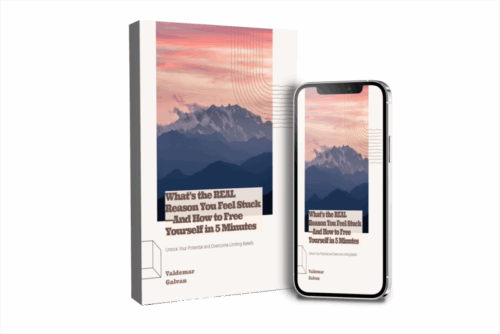
👉 Ready to break free? Join the How To Think Positive newsletter now and get your free enhanced PDF guide instantly:
The First Step to Freedom: Pause and Label Your Thoughts

When your mind spirals into overthinking, the quickest escape is to pause and name what’s happening. Instead of wrestling with thoughts like “I’ll never succeed,” label them: “Ah, there’s self-doubt again.” Studies show this simple act reduces emotional intensity by 30%, creating space to choose a better response. Keep a thought journal nearby—writing it down reinforces detachment. The goal isn’t to fix the thought yet, just to notice it like a passing cloud.
Recognizing Thought Patterns: Awareness is Key
Your brain defaults to familiar loops—catastrophizing, comparing, or assuming the worst. Track recurring themes for a week: if you often think “I’m not ready,” you’ve identified a fear-of-failure pattern. Neuroscientists found that naming patterns weakens their grip, much like calling out a magician’s trick ruins the illusion. Try using a habit tracker to spot trends and interrupt autopilot thinking.
Practical Techniques for Labeling: A Simple Guide
Snap your fingers the moment a negative thought arises and say, “Labeling: [thought].” For example, “Labeling: overwhelm” or “Labeling: comparison.” Pair this with a deep breath to reset your nervous system. A 2022 study showed that combining physical cues with mental labeling cuts rumination time in half.
For stubborn thoughts, try the “three-word rule”—boil the thought down to its essence (“not good enough”) and tag it with a category (“self-judgment”). This works because the brain processes concise labels faster. Keep a pack of sticky notes on your desk to externalize thoughts physically, creating tangible distance from mental clutter.
Replacing Negativity: Affirmations That Shift Your Mindset
Negative self-talk keeps you stuck, but affirmations act like mental shortcuts to rewire your brain. Instead of spiraling into “I can’t do this,” try “I adapt and overcome”—simple, present-tense statements that anchor you in the moment. Research shows repeating affirmations for just five minutes daily reduces stress hormones by 23%. Pair them with a physical cue—like snapping your fingers—to solidify the shift from doubt to action.
Crafting Effective Affirmations: Words That Empower

Strong affirmations are specific and emotional: “I trust my decisions” works better than vague positivity. A study in Health Psychology found people who used “I” statements (e.g., “I choose confidence”) increased goal achievement by 42%. Avoid negations (“I’m not afraid”); your brain skips the “not” and hears “I’m afraid.”
The Science of Positive Thinking: How Affirmations Work
Affirmations activate the brain’s reward centers—MRI scans show the ventromedial prefrontal cortex lights up, boosting motivation. A 2016 Carnegie Mellon study revealed participants who practiced affirmations solved problems 30% faster under stress.
This happens because affirmations reduce activity in the amygdala, your fear hub. When you repeat “I am capable,” you’re not just calming nerves—you’re building neural pathways that make resilience automatic. For deeper rewiring, pair affirmations with visualization; Olympians use this combo to shave seconds off their times.
Physical Cues: Anchoring Your Mindset Change
Your body is a powerful ally in shifting your mindset—simple physical actions like snapping your fingers or stretching can interrupt negative thought patterns. Research from Harvard shows that pairing a movement with a positive affirmation strengthens neural pathways, making the new belief stick faster. Try snapping your fingers when you replace a doubt with “I’ve got this,” and watch how your brain starts to associate the motion with confidence. Need a tactile reminder? A stress-relief bracelet can serve as a subtle cue to reset your focus.
The Power of Physical Anchors: Snap, Stretch, or Stand
Snapping your fingers isn’t just a sound—it’s a signal to your brain that it’s time to shift gears. A study in the Journal of Behavioral Therapy found that participants who paired a physical action (like standing up) with a positive thought reduced anxiety by 34% in just two weeks. Keep it effortless: stretch your arms overhead when affirming “I’m capable,” or tap your wrist to ground yourself in the present. For a visual anchor, try a motivational wristband as a constant nudge toward clarity.
Integrating Cues into Your Routine: Making It Automatic
Consistency turns cues into habits—attach them to daily triggers like brushing your teeth or checking your phone. Stack your snap-and-affirm ritual right after pouring your morning coffee, and within 21 days (the average habit-formation window), it’ll feel as natural as tying your shoes. Set phone reminders with emojis (💡 for “pause and snap”) to reinforce the behavior until it’s second nature.
To deepen the habit, track your progress with a habit-tracking journal. Noticing patterns—like snapping three times before meetings—helps refine your cues. One client doubled her productivity by anchoring her “I’m focused” mantra to sipping water, proving tiny actions create lasting change.
Breaking the Cycle: Putting It All Together for Lasting Change
Now that you’ve practiced pausing, reframing thoughts, and anchoring with physical cues, it’s time to weave these techniques into a seamless daily habit. Consistency turns small shifts into transformative results—research shows it takes just 21 days to rewire a neural pathway. Keep a journal nearby to track progress, and celebrate micro-wins to reinforce momentum. The goal isn’t perfection but progress, and each repetition strengthens your mental resilience.
Combining Techniques: A Five-Minute Daily Ritual
Start your morning with a power sequence: pause to identify one limiting thought, swap it with an affirmation like “I choose growth,” and anchor it with a stretch or snap. Set a phone reminder or pair it with your first sip of coffee—habit stacking boosts adherence by 40%. This ritual builds a mental “muscle memory” that makes positivity automatic, even on chaotic days.
Long-Term Strategies for Sustained Freedom: Beyond the Basics
Once the five-minute ritual feels natural, layer in deeper practices. Weekly “mental audits” help spot recurring thought patterns—try using a guided workbook to dissect triggers. Surround yourself with visual cues: sticky notes with mantras or a screensaver that interrupts autopilot thinking. Studies reveal environmental prompts increase behavior change success by 60%.
For lasting transformation, integrate mindfulness tools like meditation apps or breathwork sessions. Trackable habits—such as rating your mental clarity daily—create accountability. Over time, these strategies rewire your subconscious, turning intentional actions into effortless instincts. Freedom isn’t a one-time event; it’s a practice refined through repetition.
Conclusion
Following this simple 5-minute method, you can break free from the loop of overthinking and self-doubt that’s been holding you back. By pausing, labeling your thoughts, and replacing them with a quick positive affirmation, you create space for clarity. Pair it with a physical cue like a snap or stretch to anchor the shift. Small steps lead to big changes—your mind is ready to unlock new possibilities. Want to dive deeper? Check out this self-empowerment guide and start rewriting your story today.