
Just for a moment, think about the last time you felt truly satisfied with what you already have. Can’t quite pin it down? You’re not alone. We’ve been conditioned to believe that happiness lives somewhere just beyond our current reality—in the next promotion, the bigger house, the simpler lifestyle we’ll finally achieve. But here’s what I’ve learned: contentment isn’t waiting for you at the finish line. It’s right here, buried under all the noise telling you that you need more. This guide will show you how to quiet that noise and find peace with exactly where you are—not because you’ve given up on growth, but because you’ve discovered something better than the endless chase.
This post contains Amazon affiliate links, meaning I may earn a small commission if you purchase through my links, at no extra cost to you. Note: We aim to provide accurate product links, but some may occasionally expire or become unavailable. If this happens, please search directly on Amazon for the product or a suitable alternative.

Understanding Contentment
You know that feeling when you’re scrolling through your phone at 11 PM, comparing your life to everyone else’s highlight reel? That’s the opposite of contentment. Real contentment isn’t about having everything you want—it’s about wanting what you already have. It’s that quiet satisfaction you feel when you stop measuring your life against some imaginary finish line. Think of it like finally exhaling after holding your breath for years. You’re not settling or giving up on growth. You’re just done with the exhausting chase that leaves you feeling empty even when you win.
Types of Contentment
Contentment shows up in different flavors, and honestly, recognizing which type you’re experiencing can change everything. There’s material contentment—feeling satisfied with your home, your car, your stuff. Then there’s relational contentment, where you’re genuinely happy with the people in your life without constantly wishing for different connections. You’ve also got professional contentment, that rare peace with your career path even when LinkedIn makes you question everything. After you identify which areas feel most restless, you can actually address what’s really missing instead of just chasing more of everything.
- Material contentment with possessions and physical circumstances
- Relational contentment in friendships and family connections
- Professional contentment with career and work life
- Spiritual contentment with purpose and meaning
- Emotional contentment with inner peace and emotional well-being
| Type of Contentment | What It Looks Like |
| Material | Satisfied with your possessions without constant upgrading |
| Relational | Grateful for existing connections, not seeking validation |
| Professional | Fulfilled by your work without comparing titles or salaries |
| Spiritual | At peace with life’s purpose and your place in it |
| Emotional | Accepting your feelings without needing constant happiness |
Ready to turn “contentment” from a feeling into a daily practice?
This journey to lasting fulfillment doesn’t have to end here. Download your FREE, enhanced PDF guide:
“Stop Chasing More: A Gentle Guide to Finding Contentment Where You Are Enhanced PDF Guide”
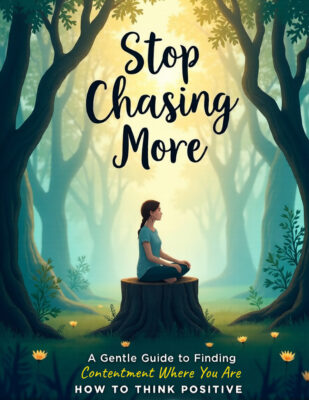
This isn’t just the article—it’s your interactive workbook, packed with:
✅ Key takeaways summarized – for quick review and motivation
✅ An exclusive “Contentment Audit” Worksheet – with practical exercises not in the post
✅ 10 bonus mindset shifts – to help you cultivate deep, lasting satisfaction
Get your free PDF instantly when you join the How To Think Positive newsletter. You’ll also receive weekly support with practical tools and uplifting insights to help you nurture a positive, contented mindset.
👉 Click Here to Download Your Free Blueprint & Sign Up
Your more peaceful, present, and fulfilled self is waiting to be discovered. Start the journey today! ✨
Factors Influencing Contentment
Your contentment levels aren’t random—they’re shaped by some pretty specific things you can actually work with. Social comparison is the big one, and it’s gotten worse since we started carrying comparison machines in our pockets. Your expectations matter too, because if you’re measuring your Tuesday against someone else’s best day, you’ll always come up short. Gratitude practices shift your focus from what’s missing to what’s present. Your physical health plays a role—it’s hard to feel content when you’re exhausted or in pain. And your sense of control over your life? That’s huge. After you understand these factors, you can stop blaming yourself and start making small adjustments that actually stick.
- Social comparison and exposure to curated online content
- Personal expectations versus reality gaps
- Daily gratitude practices and mindfulness habits
- Physical health and energy levels
- Perceived control over life circumstances
But here’s what most articles won’t tell you—these factors don’t exist in isolation. They’re all tangled up together like old headphones in your pocket. Maybe you’re scrolling Instagram (social comparison) while you’re tired (physical health), which makes you feel powerless (lack of control), which makes you forget about the good stuff (no gratitude practice). See how it spirals? The good news is that small, intentional changes in one area can ripple out and positively impact others. For example, prioritizing sleep can boost your mood, reduce social media envy, and increase your sense of control. Similarly, practicing gratitude can shift your focus from what’s lacking to what’s abundant, fostering contentment across emotional, relational, and spiritual dimensions. It’s about creating a domino effect of positivity in your life.
Practical Tips for Finding Contentment
Look, contentment isn’t some mystical state you stumble into after reading the right book or attending the perfect workshop. It’s built through small, deliberate choices you make every single day. Here’s what actually works when you’re tired of always wanting more:
- Practice gratitude before checking your phone in the morning—even just naming three things while you’re still in bed
- Stop comparing your behind-the-scenes to everyone else’s highlight reel on social media
- Set boundaries around consumption, whether that’s shopping, scrolling, or binge-watching
- Create a “enough list” instead of a wish list—write down what you already have that meets your needs
- Spend time with people who aren’t constantly chasing the next thing
- Assume that the life you have right now contains everything you need to be happy.
Step-by-Step Approaches
Think of building contentment like learning to play an instrument—you can’t master it overnight, but you can follow a clear progression. Start with awareness, then move to action, and finally to integration. Here’s how it breaks down:
| Phase | What You’ll Do |
| Week 1-2: Awareness | Track every time you feel “not enough”—write it in a gratitude journal without judgment |
| Week 3-4: Pause | Before any purchase or commitment, wait 48 hours and ask “will this actually change how I feel?” |
| Week 5-6: Redirect | When wanting strikes, redirect to what you already have—touch it, use it, appreciate it |
| Week 7-8: Deepen | Share your contentment practice with one friend and support each other |
Daily Habits to Cultivate Contentment
Your morning sets the tone for everything. Before you reach for your phone, try this: sit up, take three deep breaths, and say one thing you’re genuinely glad about in your current life. Maybe it’s your comfortable pillow or the fact that you’ve got coffee waiting downstairs. Sounds simple, maybe even cheesy, but this tiny practice rewires your brain to notice what’s working before you look into what’s missing.

Throughout your day, you’ll want to anchor yourself with what I call “contentment checkpoints.” At lunch, put your phone face-down and actually taste your food—notice the flavors, textures, the fact that you have food at all. In the afternoon when the comparison trap hits hardest, take a five-minute walk outside without earbuds and just… be present. Notice the temperature, the sounds, your own breathing. And here’s the thing nobody tells you: contentment grows stronger when you practice saying “no” to good things, not just bad ones. Decline that extra project, skip that sale email, turn down plans when you’d rather stay home with a good book. Each “no” is actually a “yes” to what you already have. Before bed, write down one moment from the day when you felt enough—not ecstatic, not accomplished, just… enough. These small rituals compound over weeks and months, building a foundation of contentment that doesn’t crumble every time Instagram shows you someone’s perfect life.
Pros and Cons of Pursuing Contentment
Look, I’d be lying if I told you that choosing contentment is all sunshine and peaceful mornings. It’s not a magic fix, and honestly, it comes with its own set of trade-offs that nobody really talks about. You’ll face pushback—from yourself, from society, maybe even from people who love you but don’t quite get it. But here’s the thing: understanding what you’re signing up for makes the whole journey feel less confusing when those weird moments hit.
| Pros | Cons |
| Reduced anxiety and stress levels | May be mistaken for lack of ambition |
| Better sleep and physical health | Can feel uncomfortable at first |
| Deeper relationships and presence | Goes against cultural messaging |
| More gratitude for what you have | Requires constant practice |
| Financial freedom from less wanting | Others might not understand your choices |
| Increased focus and productivity | Fear of “settling” or missing out |
| Greater emotional resilience | Challenging to maintain during tough times |
| Less comparison with others | May need to distance from toxic influences |
Advantages of Embracing Contentment
The benefits hit you in ways you don’t expect. Sure, you’ll save money by not buying that random stuff you don’t need, but the real gift? You’ll finally sleep through the night without your brain spinning through tomorrow’s to-do list. Your body relaxes when you stop treating life like a race you’re losing. Studies show that people who practice contentment have lower cortisol levels—that’s the stress hormone that’s been quietly wrecking your health. And your relationships? They get better because you’re actually there, not half-present while mentally chasing the next thing.
Potential Challenges and Misconceptions
Here’s where it gets tricky. People will think you’ve given up. They’ll see you turning down promotions or skipping the upgrade cycle, and they’ll worry about you. Maybe you’ll worry about yourself too—that voice asking “am I just being lazy?” gets loud sometimes. Our culture doesn’t have great language for the difference between contentment and complacency, so you’ll need to get comfortable explaining yourself. And honestly, some days you won’t be sure either.
The biggest misconception? That contentment means you stop growing or wanting anything at all. But that’s not it. Think about it this way: contentment isn’t about lowering your standards or abandoning your goals. It’s about unhooking your peace from outcomes you can’t control. You can still want things, work toward things, build things—you’re just not basing your entire sense of worth on whether you get them. The challenge is holding both at once: being okay with now while still moving forward. That balance feels wobbly at first, like learning to ride a bike. You’ll overcorrect sometimes, swinging between “I should want more” and “wanting anything is wrong.” Neither extreme is right. The sweet spot is somewhere in the messy middle, and finding it takes practice—more practice than anyone wants to admit.
To Wrap Up
Ultimately, contentment isn’t waiting for you at the finish line of some achievement you haven’t reached yet. It’s here, right now, in the life you’re already living. Look, I get it—stopping the chase feels scary, maybe even irresponsible. But here’s the thing: finding peace with where you are doesn’t mean giving up on growth. It means you’re finally building from solid ground instead of quicksand. Start small. Notice one thing today that’s already good enough. Maybe grab a gratitude journal or just pause during your morning coffee. You don’t need more to be enough. You already are.
FAQ
Q: What exactly is “Stop Chasing More” about, and who’s it really for?
A: Look, this isn’t another productivity guide or book telling you to hustle harder. It’s actually the opposite. “Stop Chasing More” is for anyone who’s exhausted from constantly feeling like they’re not doing enough, earning enough, or being enough. You know that voice in your head that says “just one more thing and then I’ll be happy”? This guide gently challenges that. It’s perfect if you’re tired of the comparison game on social media, if you’ve achieved goals only to feel… empty afterward, or if you’re just worn out from the never-ending race. The author walks you through finding peace with where you are right now, not in some imagined future. And honestly? It’s a relief to read something that doesn’t demand more from you. If you’re looking to explore this mindset shift further, check out some mindfulness books that complement this approach beautifully.
Q: I’m someone who’s always setting goals. Won’t this guide make me complacent or lazy?
A: Here’s the thing… contentment doesn’t mean giving up. It means changing your relationship with ambition. Think about it this way: when you’re constantly chasing, you’re running on anxiety and scarcity. When you’re content, you’re creating from a place of fullness. The guide actually helps you distinguish between goals that genuinely matter to you versus ones you’re chasing because society says you should. You’ll still grow and create things. But you won’t be doing it from that desperate, never-enough place that burns people out. I’ve seen people read this and actually become more effective because they’re not scattered across a million “shoulds.” They focus on what truly lights them up. If you’re worried about losing your edge, maybe grab a journal for goal setting to work through these ideas as you read.
Q: Does the guide offer practical exercises, or is it just philosophical ideas?
A: It’s definitely both, which I appreciate. There are reflection prompts throughout that actually make you pause and think. Things like identifying what “enough” looks like in different areas of your life, or noticing when you’re chasing something out of fear versus genuine desire. Some readers work through it with a gratitude journal alongside, which seems to deepen the experience. There are also practical strategies for dealing with that constant urge to scroll and compare, or for handling well-meaning people who don’t understand why you’re not climbing higher. It’s gentle guidance, not homework. You can take what resonates and leave the rest. But yeah, you’ll walk away with actual tools, not just warm fuzzy feelings.
Q: How is this different from all the other guides and books about minimalism and simple living?
A: Good question. Most minimalism books focus on your stuff… decluttering your closet, owning fewer things, that sort of approach. And that’s fine, but “Stop Chasing More” goes deeper into the mental and emotional clutter. It’s about decluttering your ambitions, your identity, your sense of worth. You don’t have to live in a tiny house or give away all your possessions (though you can if that’s your thing). This is more about the internal shift. Why do we keep adding more to our plates? What are we really searching for? The tone is also different… less preachy, more like a wise friend who’s been through it. If you’re into the physical decluttering aspect too, pairing this with some organizing books could give you a complete reset. But this guide tackles the root of why we accumulate in the first place, whether that’s material possessions, social obligations, or even emotional baggage. It’s not just about simplifying your external world—it’s about aligning your choices with what truly matters to you, so you can live with intention and fulfillment.